Short answer: Modern car keys do two jobs — they mechanically turn the lock, and they quietly send a secret code to your car's computer. If that code is not right, the engine will not start even with a perfectly cut key. Here is what is really happening and how a locksmith solves it.
Modern car keys do two jobs — they mechanically turn the lock, and they quietly send a secret code to your car's computer. If that code is not right, the engine will not start even with a perfectly cut key. Here is what is really happening and how a locksmith solves it.
Most vehicles built since the late 1990s use an immobilizer: a small chip in the head of the key transmits an encrypted ID to a receiver ring around the ignition (or an antenna in push-to-start cars). If the car does not recognize that ID, it disables the fuel or starter, so you will often see the engine crank and die, or simply do nothing while a key or immobilizer light flashes on the dash. This is why a hardware-store copy that is cut but not programmed is useless on these cars — and why 'make me a spare' is really two services: cutting the blade and programming the chip.
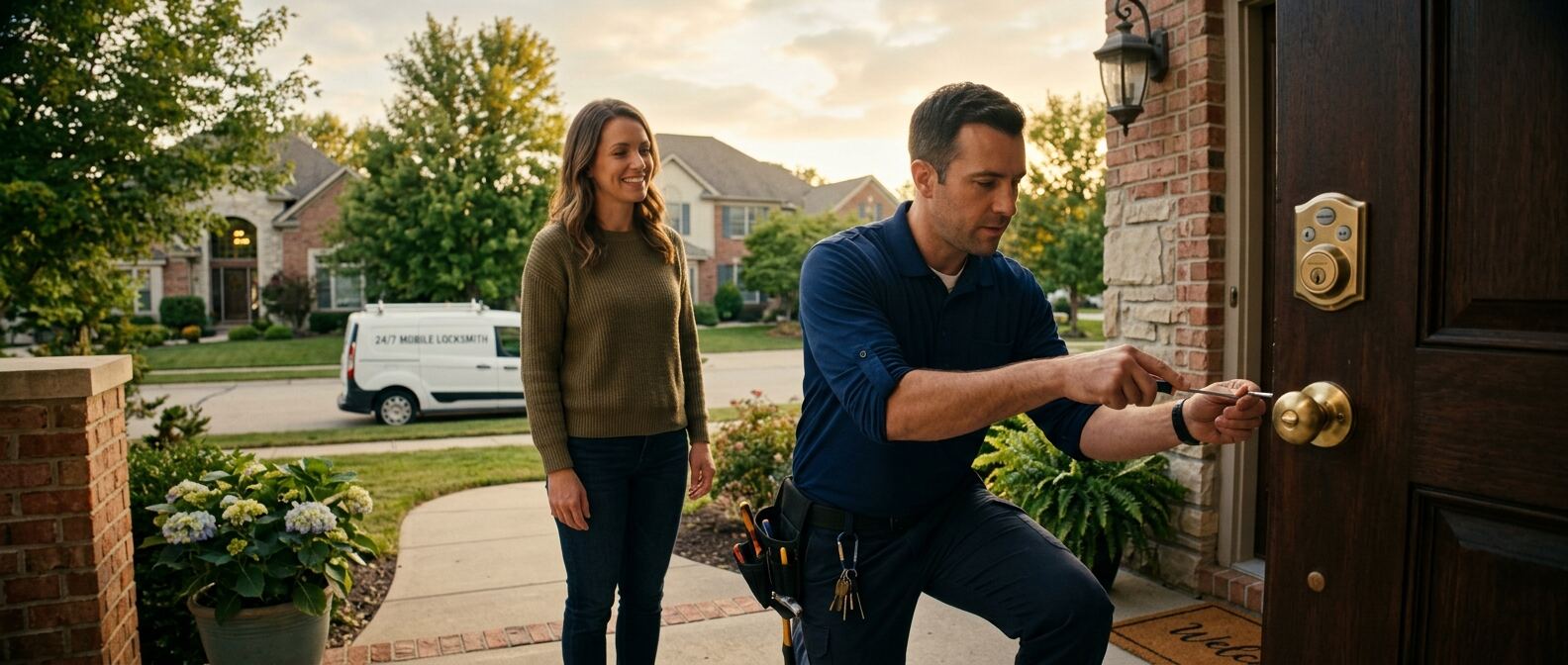
A well-equipped mobile locksmith carries the same category of programming tools the dealer uses and can pair a new key to your car's computer in your driveway, usually in under an hour for common models. The dealer route often means towing the car in, waiting on an ordered key, and paying dealer labor rates. Where a dealer still has an edge is on certain very new or high-security platforms whose codes are locked behind manufacturer servers; a good locksmith will tell you honestly when your specific vehicle is one of those rather than guessing. As a ballpark, a cut-and-programmed transponder key commonly runs in the low hundreds, while proximity ('smart') fobs for push-button cars sit higher — always vehicle-dependent, so get the number for your exact year, make, and model.
Losing every working key is not the disaster it feels like. Instead of copying an existing key, the locksmith decodes your locks or pulls a key code to cut a fresh mechanical key, then puts the car into a programming mode to teach it a brand-new key from scratch. It takes more time and skill than adding a spare, and some immobilizer systems enforce a security waiting period, but it is routine work for an auto specialist. One honest heads-up: because generating keys from nothing is exactly what a thief would want, a reputable locksmith will ask you to prove the car is yours — treat that as a good sign, not an insult.
Most vehicles built since the late 1990s use an immobilizer: a small chip in the head of the key transmits an encrypted ID to a receiver ring around the ignition (or an antenna in push-to-start cars). If the car does not recognize that ID, it disables the fuel or starter, so you will often see the engine crank and die, or simply do nothing while a key or immobilizer light flashes on the dash. This is why a hardware-store copy that is cut but not programmed is useless on these cars — and why 'make me a spare' is really two services: cutting the blade and programming the chip.
A well-equipped mobile locksmith carries the same category of programming tools the dealer uses and can pair a new key to your car's computer in your driveway, usually in under an hour for common models. The dealer route often means towing the car in, waiting on an ordered key, and paying dealer labor rates. Where a dealer still has an edge is on certain very new or high-security platforms whose codes are locked behind manufacturer servers; a good locksmith will tell you honestly when your specific vehicle is one of those rather than guessing. As a ballpark, a cut-and-programmed transponder key commonly runs in the low hundreds, while proximity ('smart') fobs for push-button cars sit higher — always vehicle-dependent, so get the number for your exact year, make, and model.
Losing every working key is not the disaster it feels like. Instead of copying an existing key, the locksmith decodes your locks or pulls a key code to cut a fresh mechanical key, then puts the car into a programming mode to teach it a brand-new key from scratch. It takes more time and skill than adding a spare, and some immobilizer systems enforce a security waiting period, but it is routine work for an auto specialist. One honest heads-up: because generating keys from nothing is exactly what a thief would want, a reputable locksmith will ask you to prove the car is yours — treat that as a good sign, not an insult.
Call (877) 771-4458 and describe the situation, your exact location, and what you need. Timing is confirmed on that call rather than promised in advance.
Call for help: (877) 771-4458 — a straight answer and an honest estimate before any work begins.